
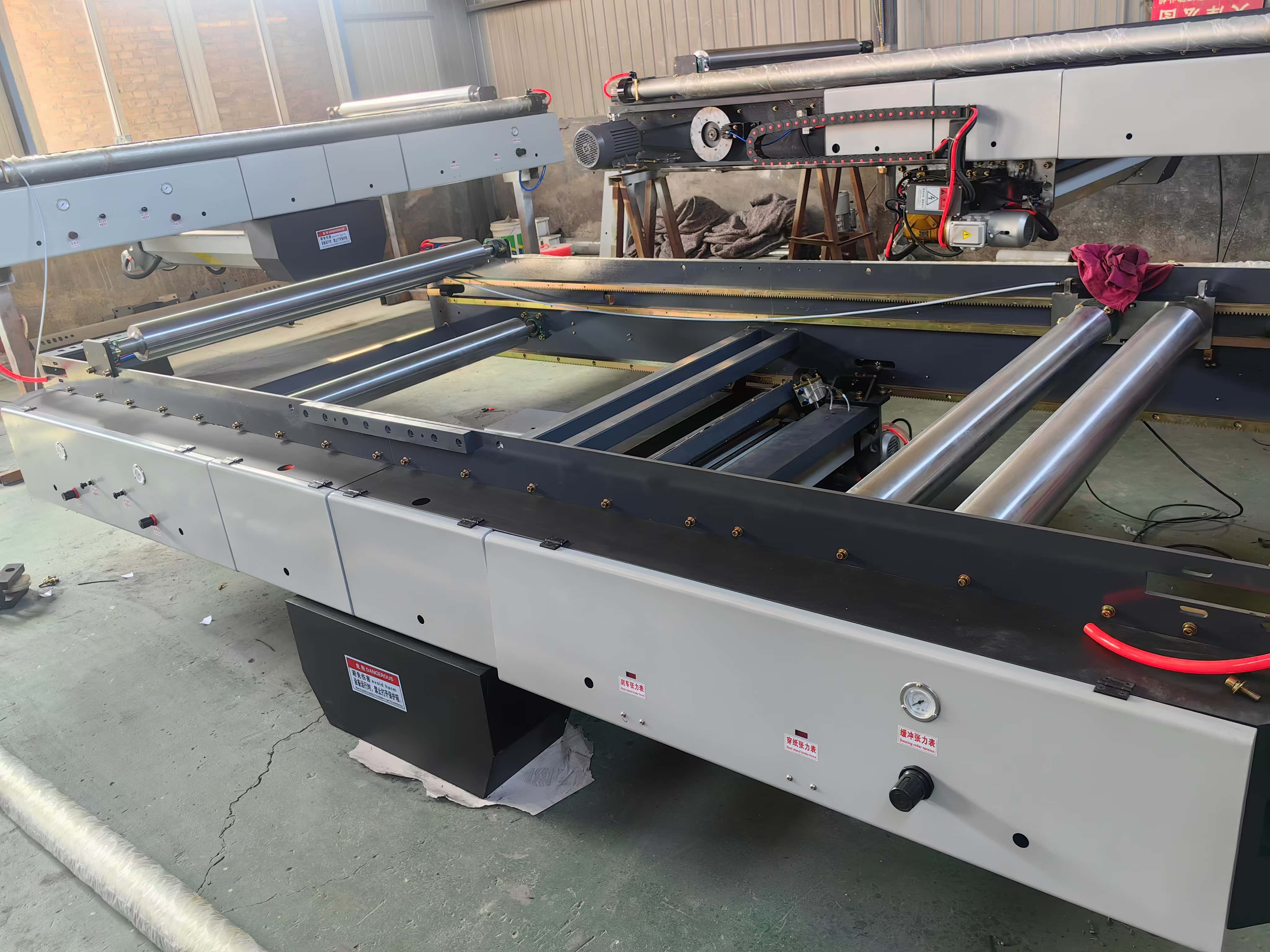
It is no secret that profit margins in the corrugated packaging industry are razor-thin. Data indicates that waste generated from the corrugator line accounts for approximately 80% of the total waste generated by corrugated box plants.
If the corrugated board production line is the heart of the factory, then the automatic splicer is the vital valve ensuring that the heart never stops beating. How exactly does it transform a "source of waste" into a "source of profit"? Let’s break it down.
1. Eliminate “paper-changing downtime” and release production capacity limits
Traditional manual splicing requires slowing down or even stopping the machine, which significantly impacts average operating speed. Automatic splicers enable seamless transitions between old and new paper rolls at maximum speed, without a paper accumulator, ensuring continuous, uninterrupted paper feed. Combined with fully automatic PLC control and automatic tension adjustment, the system achieves a very high success rate for roll changes, preventing paper breaks caused by manual operation errors.
2. Savings go straight to the bottom line: Waste reduced by 60%–80%
This 60%–80% reduction in waste is not the result of savings at a single stage, but rather the cumulative effect of multiple loss-reduction mechanisms: automatic splicers reduce the overlap—which ranges from 80–150 mm during manual splicing—to just 30–50 mm; combined with a paper-break detection system, they allow the roll to be used down to the final few meters before switching, thereby eliminating material waste from "core remnants." More importantly, they enable full-speed splicing, preventing the significant warping-related waste caused by temperature and adhesive fluctuations during the deceleration and re-acceleration required for manual roll changes, while also fundamentally avoiding line-wide paper breaks caused by human error. These factors combined easily cut material waste by 30%–40%; when the gains in production capacity and yield rates are factored in, an overall waste reduction of 60%–80% aligns perfectly with actual industry data—and every penny saved translates directly into net profit.
3. Stable quality—reduces warping and wrinkling
Tension fluctuations during paper roll changes are the primary cause of board warping and poor bonding. Automatic splicers utilize precision tension control systems—such as servo technology or dual-control mechanisms—to maintain constant tension at the moment of the splice. This not only reduces web breaks but also ensures consistent board strength, allowing your product to stand the test of quality in your customers' hands.
Key Points for Installation and Maintenance
I. Installation
1. Mill Roll Stand Centering Alignment: Ensure the paper roll's centerline is precisely aligned with the corrugating line's centerline to prevent roll misalignment, which could lead to skewed splicing or wrinkling in subsequent processes.
2. Tension Control System Zero-Point Calibration: After installation, both no-load and loaded tension calibrations must be performed to ensure the sensor feedback matches the actual tension; this is crucial for preventing web breaks during the splicing process.
3. Pneumatic system compliance: Compressed air pressure must remain stable at ≥0.6 MPa, and the air must undergo drying and filtration (moisture and oil contamination can damage solenoid valves and pneumatic components).
4. Electrical Signal Commissioning: Establish communication with the PLC control system of the entire corrugator line to ensure that paper-splicing commands are synchronized with parameters such as line speed and preheater cylinder temperature.
Trial Run Verification: Conduct multiple splicing tests using waste paper rolls—progressing from low to medium and finally full speed—to verify that the cutter operation, pressure roller timing, and tape adhesion quality all meet standards before commencing production.
II. Maintenance
In conclusion, in an era of razor-thin margins, automated paper splicing is no longer an optional extra—it is an essential feature that determines whether you can win the battle on costs. Instead of hemorrhaging profits due to repeated production stoppages, take the initiative and equip your corrugator line with technology that drives competitive advantage.
https://www.htwirebelt.com/auto-splicer.html
can not be empty
can not be empty


Web: www.htwirebelt.com
TEL : +0086 0311 80690567
EMAIL:market@huataogroup.com
WhatsApp & WeChat :
+86 18033763037