
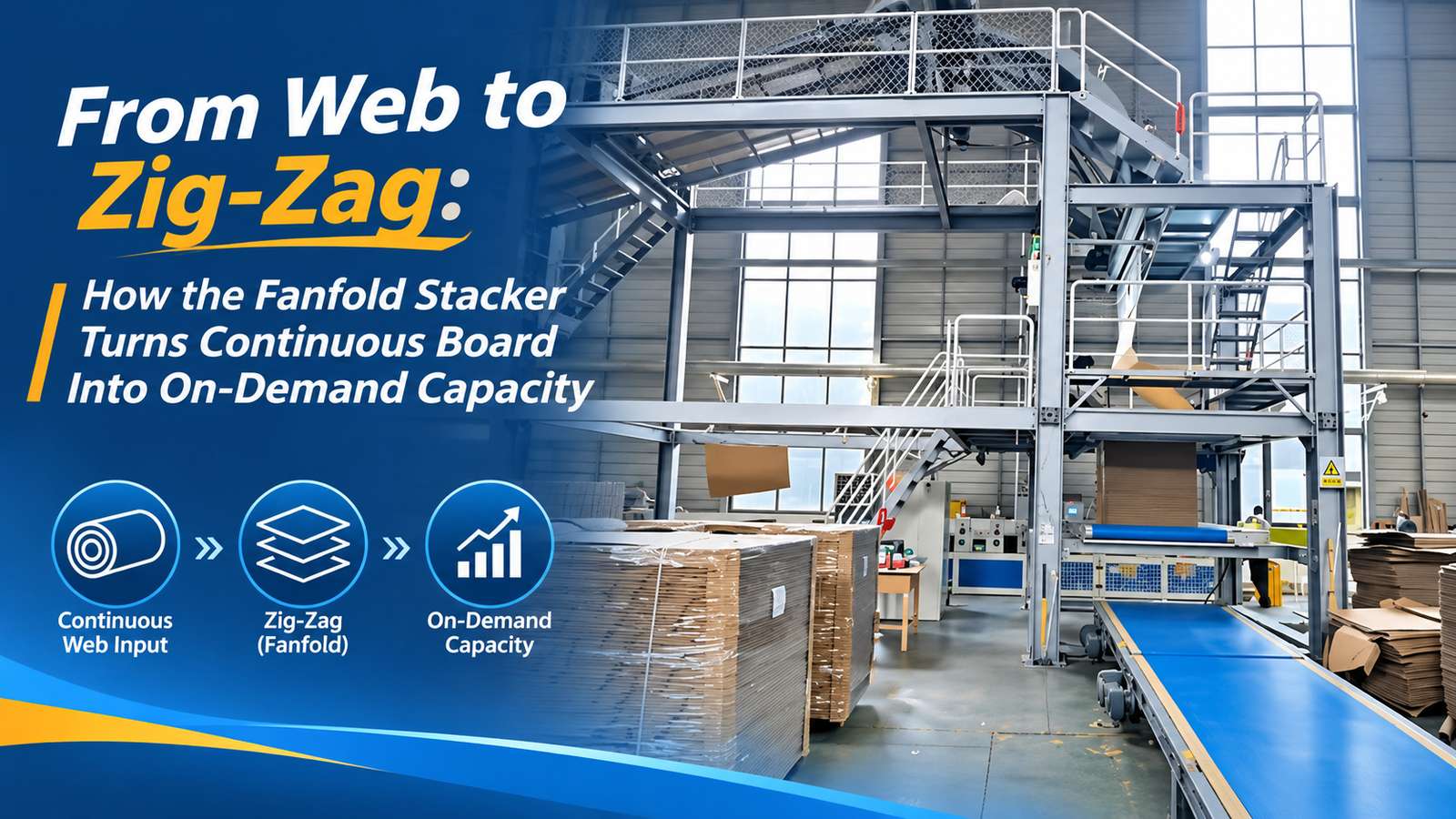
Box plants spend a lot of money making sure the front of the corrugator runs well. Wet end tuning, splicer timing, glue application, roll quality. Then the board crosses the dry end, gets cut into piles of sheets, and sits. Sometimes for days. Sometimes until it's the wrong size for whatever the market wants next.
The fanfold corrugated cardboard stacker exists to break that pattern. It converts the continuous web into a folded, connected pack at the dry end, and that pack is the raw material for on-demand box making. This article explains how the machine actually works, where its tolerances come from, and what a plant should verify before committing to one.
Start with the end result, because it explains every design choice in the machine.
A conventional stacker outputs piles of sheets. Each pile is one size, tied to one order or one SKU. A fanfold stacker outputs a zig-zag pack: board cut at the fold pitch and folded alternately forward and back, layer upon layer, into one connected ribbon. Feed that ribbon into an automatic box-making machine and every subsequent box can be a different size, made to order, with no die change and no pre-cut inventory.
That's why the fanfold stacker has become the gateway machine for box-on-demand operations serving e-commerce and 3PL customers. The board stays generic; the specificity happens at conversion time, minutes before shipping.
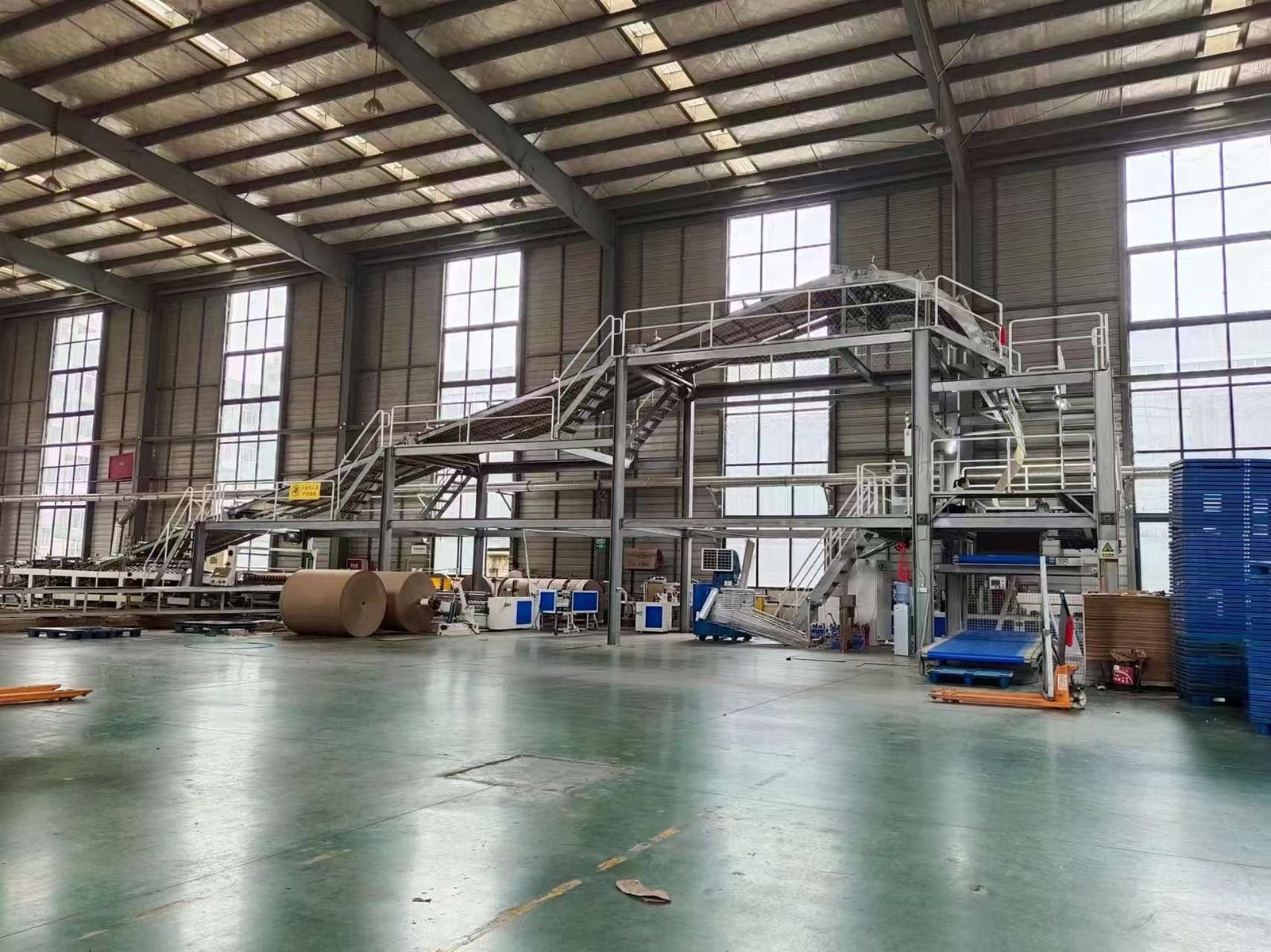
Board leaves the double facer and climbs an inclined delivery conveyor into the stacker. Lateral guides set web position. The critical variable at this stage is flatness. Residual warp, the kind that comes from uneven moisture across the web or uneven hot plate contact, enters the fold point off-axis, and the error doesn't reset. On a cut-size line a warped sheet is one bad sheet. On a fanfold line a warped web skews the first fold and every fold after it compounds the skew. Twenty layers later the pack is visibly out of square.
Practical implication: plants moving to fanfold should audit dry-end flatness first. The stacker amplifies what it receives.
The cutoff machine cuts the web to length, but on a fanfold line the length in question is the fold pitch, not the customer sheet size. This redefinition matters for maintenance thinking: cutoff accuracy is now a fold-quality parameter, not just a sheet tolerance. A cutter drifting a few millimeters per cut produces packs that grow out of register down their depth.
Sync is the other half of this stage. Cutoff timing and the folding motion must share one control reference. If the cutter fires during an incomplete fold cycle, you get doubled or short panels, or worse, a jam at the fold point. Servo-integrated designs hold this sync through speed changes far better than mechanical linkages, which is worth probing in any machine comparison.
This is the signature motion. As each cut panel enters the folding section, a fold blade or deflector catches its leading edge and folds it back over the incoming web. The next panel passes beneath and folds the opposite way on the return cycle. Forward, back, forward. The pack grows in place while the web keeps feeding at line speed.
Two failure modes dominate:
* Deflector lag. Panels pile in a soft V. The pack looks loose, shifts during handling, and feeds erratically.
* Deflector lead. The fold creases hard and crushes flutes at the crease line. This defect is sneaky because it surfaces downstream at the box maker's feed rollers, sometimes days after the stacker setting drifted.
Both trace to synchronization and hardware condition: worn deflector faces, damaged fold blades, misaligned guides.
The stacker bed lowers progressively so the fold point stays at a constant working height regardless of pack depth. At the set layer count or pack height, the pack discharges to a pallet or roller conveyor and a new stack begins. The engineering question at this stage is continuity: does the discharge pause the fold cycle, or does a secondary platform keep folding running while the finished pack slides away? Machines differ here, and the right answer depends on your order profile. High order-count plants generally can't afford a fold-cycle pause every pack change.
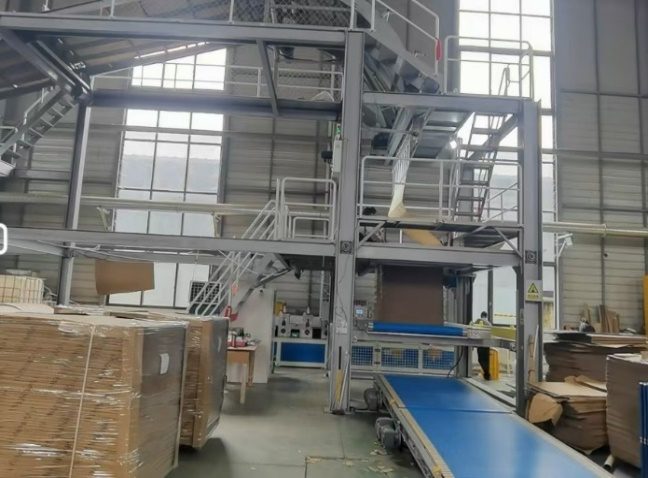
The stacker itself doesn't create savings. It enables them. The economics live in what the pack feeds:
The market backdrop reinforces the case. In November 2026, leading containerboard producers announced another round of increases of about 50 yuan per tonne on corrugated paper and kraft linerboard grades, phased in from mid-November on the back of recovered fiber and coal costs. Every square meter of board now carries more cost, so waste and inventory errors weigh more heavily. Meanwhile the e-commerce parcel cycle, just past its November "Double 11" peak, keeps rewarding operations that can size boxes to the product instead of shipping air.
For a deeper look at that economics from the box-plant side, the guide on handling small corrugated box orders profitably covers the on-demand model in detail. And for machine context, the fanfold corrugated cardboard stacking machine product page shows how the stacker integrates with the dry end. The automatic stacker page is useful for comparison if your line still runs cut-size output.
Most fanfold stacker problems cluster into five symptoms. Worth keeping this list near the dry end:
Honestly, a disproportionate share of these trace to changeover discipline. Fanfold has no reset point between sheets, so setup slop that a cut-size line would absorb quietly becomes visible defects. Plants that formalize a stacker-specific changeover checklist get markedly fewer of these calls.
Suppliers need line context to quote responsibly. Before requesting pricing, pull together:
* Corrugator make and model, and the dry-end layout where the stacker will sit
* Working width and the web widths actually run
* Design speed at typical grades, not just nameplate maximum
* Flute range and caliper window
* Fold pitch range needed to cover your customers' box sizes
* Pack height and layer count at discharge, and the discharge format
* Control architecture: shared servo platform or interface work required
HUATAO GROUP, as a supplier of fanfold stacking machines and corrugator dry-end equipment, works through these parameters with buyers before quoting. Sending them in the first inquiry genuinely does shorten the process; it replaces several rounds of back-and-forth with one technical review.
Contact: Chris Xue | HUATAO GROUP
Email: chris@huataogroup.com
WhatsApp: +86 19322109200
Website: www.huataogroup.com
can not be empty
can not be empty


Web: www.htwirebelt.com
TEL : +0086 0311 80690567
EMAIL:market@huataogroup.com
WhatsApp & WeChat :
+86 18033763037