
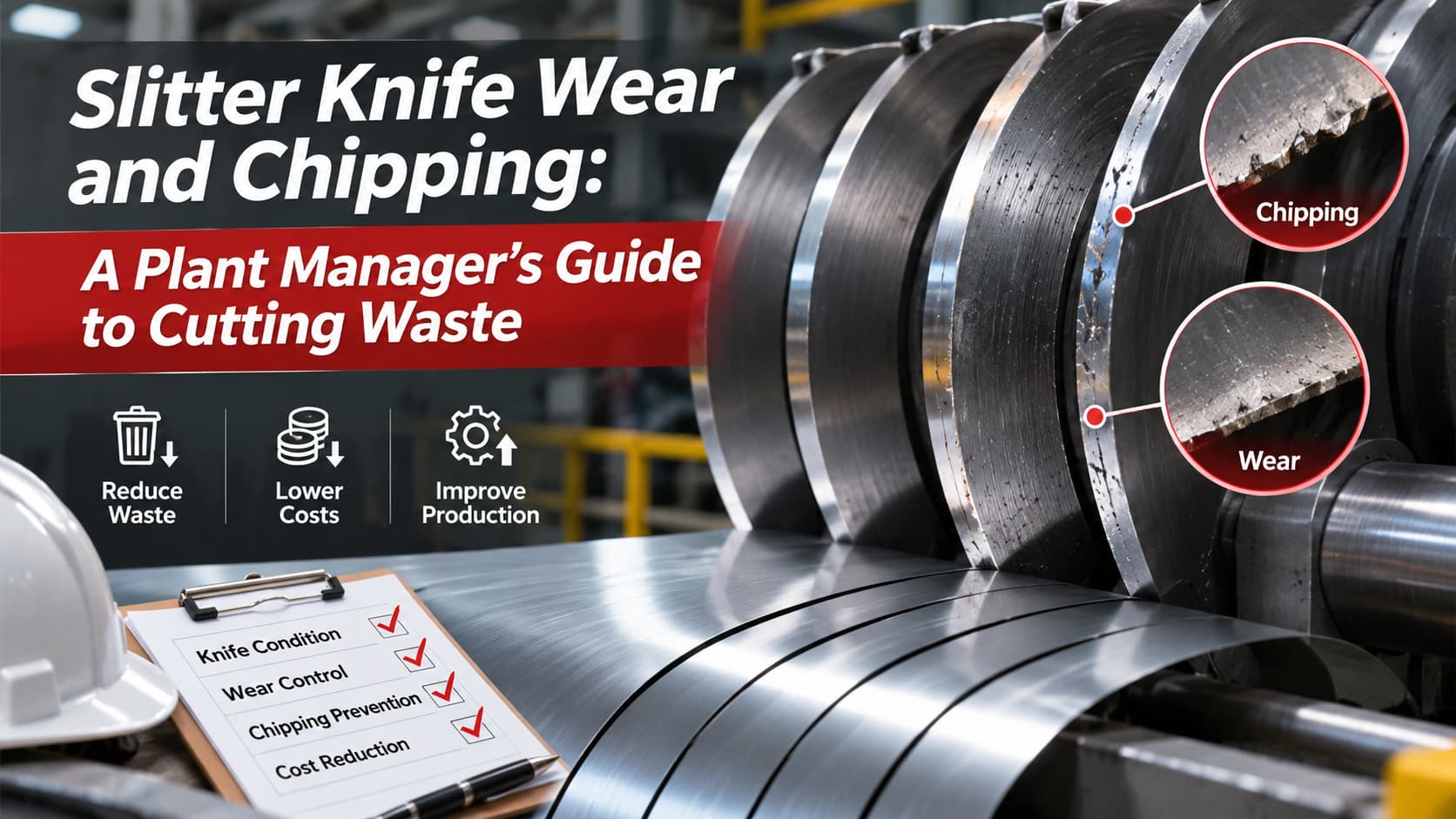
Walk the dry end of any corrugated board plant and ask one question: where does the edge-crushed scrap come from?
The answer, more often than not, points back to the slitter section. And specifically to knives that are wearing out, chipping, or running with the wrong settings. For a plant manager this isn't a maintenance detail buried in someone else's logbook. It sits directly on top of two cost lines, scrap yield and unplanned downtime, and it's one of the few problems where a week of attention can change a month of numbers.
This guide breaks down the causes of slitter knife wear and chipping, connects each one to what you actually see in production, and lays out a prevention plan you can roll out without stopping the line.
Before the causes, the stakes.
In November 2026, major containerboard producers announced another round of increases of roughly 50 yuan per tonne on corrugated paper and kraft linerboard, phased in from mid-November across multiple production bases. Whatever a plant pays today, the trend across 2026 has been upward. Peak-season demand around e-commerce events keeps short-run, changeover-heavy schedules on the books too, so there's no relief coming from the order side either.
That changes the arithmetic of knife neglect.
Edge crush means boxing out corners that fail QC. Fuzz and burrs mean printing defects and feeder jams downstream. Width drift means blanks that no longer match the order. Each of those is scrap or rework, and each scrap meter now carries a higher paper cost than it did a year ago. Honestly, that's the whole argument in one sentence: a knife program is a yield program.
Recycled linerboard and corrugating medium carry mineral grit, adhesives, and contaminant fragments. Coated grades add clay and calcium carbonate on the surface. Every meter of web is an abrasive pass over the edge. Multiply that by line speed and by shift, and you can see why furnish dominates the wear conversation.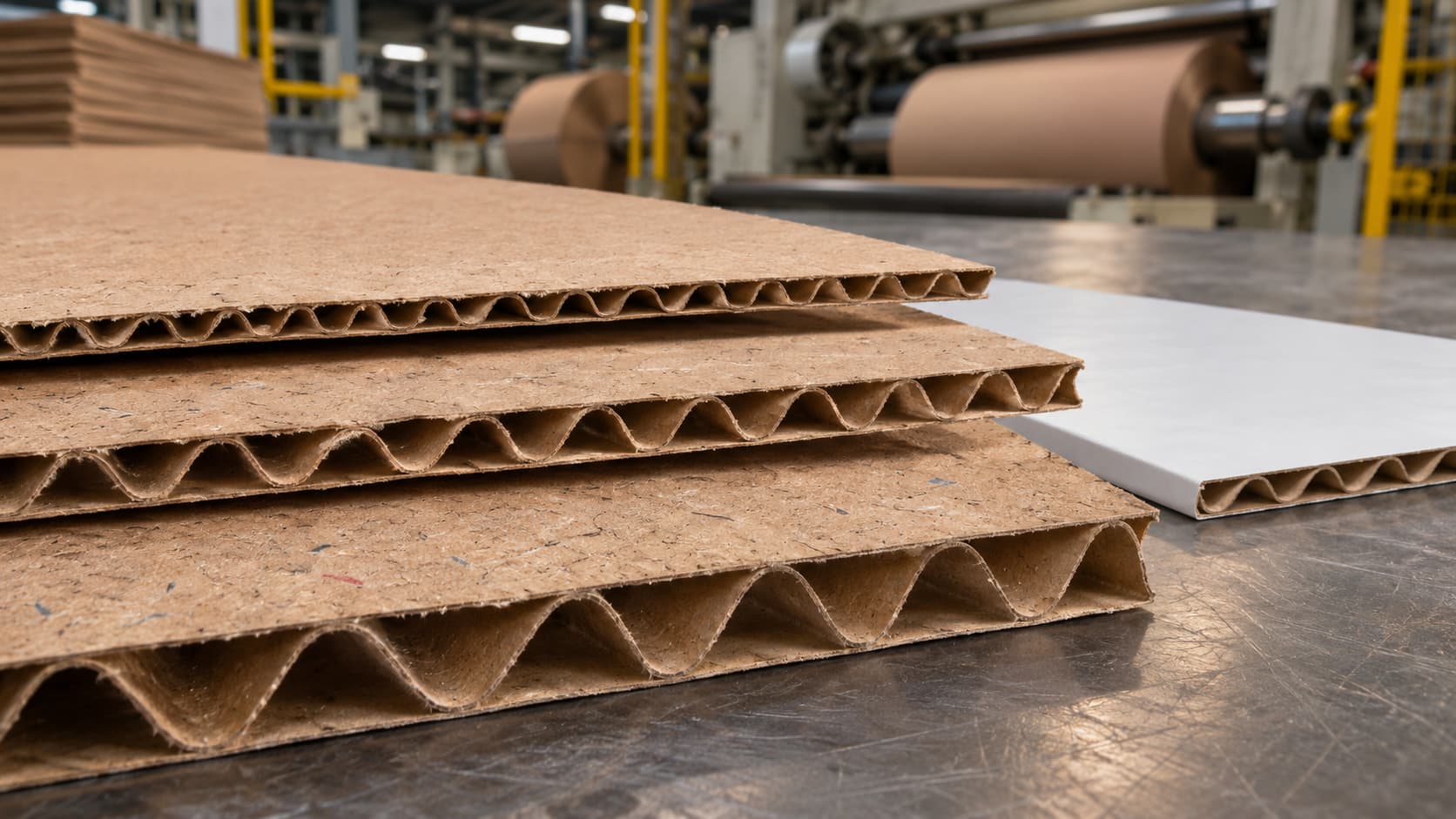
Plants running heavy recycled or coated mixes see materially shorter intervals between knife changes than plants on clean virgin furnish. That gap is the single strongest argument for blade material selection, and it's worth settling before you argue about rotation intervals.
Tool steel edges round quickly under this load. A correctly specified tungsten carbide slitter knife holds its geometry far longer, which turns knife changes from emergency events into scheduled maintenance windows. We've seen that one change calm down an entire slitter section.
Wear thins an edge. Chipping removes pieces of it. Different failure, different fix.
The impact sources are well understood: hard contaminants passing through at line speed, blades knocked against machine frames during changes, blades stored loose or stacked edge-to-edge, and dirty or worn holder faces that let a blade seat off-center and vibrate in service.
 Carbide's hardness cuts both ways. It resists abrasion brilliantly, but it chips when struck. So the handling discipline that prevents chipping is simple and cheap: individual sleeves, cleaned mounting surfaces, defined clamping torque, and one firm rule — blades never touch bare steel on their way into or out of the machine. None of that needs capital spend. It just needs someone to own it.
Three settings decide whether a fresh edge survives:
Here's the diagnostic shortcut, and it saves a lot of wasted blades: if a new knife fails within days at one position while others run normally, stop replacing knives. Inspect that position's holders and anvils. The blade is the messenger, not the cause.
Line speed multiplies abrasive passes per minute and raises edge temperature. A knife program calibrated on a slower machine will underperform after an upgrade. Quietly, at first, which is what makes it easy to miss.
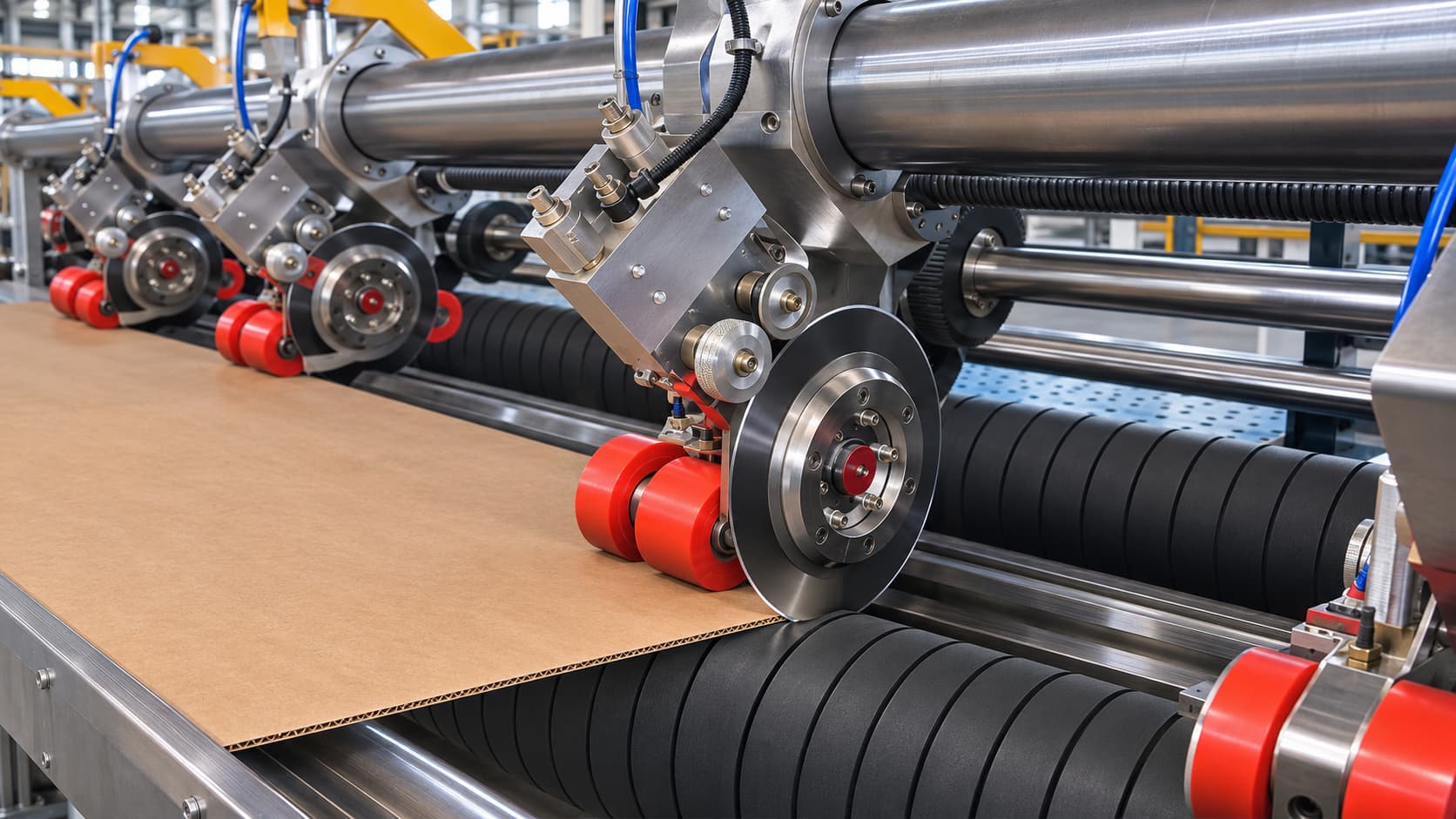
Changeover frequency compounds the risk, because every grade change re-opens the chance of clearance and handling errors. Computer-controlled slitting reduces both the time and the human variability in every changeover. A modern corrugated slitter scorer machine with fast, repeatable positioning is increasingly treated as the baseline by plants running short e-commerce runs, and honestly, once you've watched an NC changeover next to a manual one, it's hard to argue otherwise.
Connecting Symptoms to Causes
|
What you see in production |
What it usually means |
Where to act |
|
Steadily rising dust under the slitter |
Abrasive wear |
Blade material, rotation schedule |
|
Sudden defects after one order |
Impact chip |
Web cleaning, contaminant control, edge inspection |
|
Polished/discolored edge faces |
Overlap too deep |
Re-set kiss-cut depth |
|
Fuzz and burrs with an apparently sharp edge |
Clearance too wide |
Re-set clearance for caliper |
|
New knives failing repeatedly at one position |
Vibration or holder fault |
Bearings, holder faces, anvil condition |
|
Off-width blanks late in long runs |
Edge rounding |
Rotation interval, carbide upgrade |
Keep this table near the slitter section. Half the value is that operators stop guessing.
A Prevention Plan That Fits Production
Step 1. Audit the current state. One week of data: knife changes per position, grades run, dust observations, scrap attributed to edge defects. That's it. This establishes the baseline, and it usually exposes the worst offending grades immediately. You may be surprised which order is eating your blades.
Step 2. Match blades to grades. Carbide for recycled and coated positions. Reserve the discussion about rotation intervals until the material decision is made. The order matters more than people expect. Order by corrugator model, diameter, thickness, and bore to eliminate seating mismatches.
Step 3. Standardize handling and setup. Sleeves, torque, clean faces, and a clearance check written into the grade-change procedure. Written down, not "everybody knows." None of this needs capital spend, which is exactly why it's worth doing first.
Step 4. Inspect on a schedule. A loupe check per shift and a documented edge photo per change. That builds the history that makes rotation intervals rational instead of guessed. In our experience, the photo archive alone settles more arguments than any meeting.
Step 5. Fix the machine, not just the blade. Worn holders, rough anvils, and misaligned shafts will defeat any knife you buy. The surrounding wear parts, from holders and anvils to the NC cut off blade assembly that finishes sheet length, belong in the same spares and maintenance plan as the knives themselves. A structured overview is available through the corrugator machine spares hub.
Five steps, and only the last one touches the machine itself. The rest is discipline. That's usually how it goes.
Plants that complete this sequence report the same pattern. Dust levels stabilize. The gap between knife changes stretches out. Edge-defect scrap becomes an exception rather than a daily conversation. And the slitter section stops being the plant's most frequent downtime source, which your maintenance crew will notice before anyone else does.
Is it dramatic? No. That's rather the point. The win is quieter shifts, fewer surprises, and a yield report that trends the right way.
If edge crush, fuzz, or dust is showing up at your slitter section, send HUATAO GROUP the corrugator brand and model, working width, operating speed, and current blade dimensions. As a supplier of slitter knives and corrugator spare parts, HUATAO can help you match blade specification to your grade mix and build a rotation plan around your production schedule.
Contact: Chris Xue | HUATAO GROUP
Email: chris@huataogroup.com
WhatsApp: +86 19322109200
Website: www.huataogroup.com
can not be empty
can not be empty


Web: www.htwirebelt.com
TEL : +0086 0311 80690567
EMAIL:market@huataogroup.com
WhatsApp & WeChat :
+86 18033763037